

Why Premium Hemp Costs More: The Real Price Breakdown
Table of Contents
- Why Premium Hemp Costs More: The Real Cost Drivers
- Cultivation and Genetics: Where the Price Gap Starts
- The Benefits of Indoor Grown Hemp That Justify the Price
- The Importance of COA in Hemp: Testing Is Not Free
- Extraction, Processing, and Post-Harvest Losses
- How to Buy Lab Tested THCA Flower Online Without Overpaying
- What 'Premium' Actually Means: A Definition Breakdown
- Conclusion: Paying for What You Can Verify
- Frequently Asked Questions
Last Updated: October 7, 2026
Why Premium Hemp Costs More: The Real Cost Drivers
Premium hemp costs more because the price reflects what happens before the product ever reaches a shelf: controlled cultivation, full-panel lab testing, careful post-harvest handling, and the losses incurred along the way. Understanding why premium hemp costs more starts with a simple fact: the gap between a cheap gram and an expensive one is not marketing. It is overhead. This guide from I AM HEMP breaks down each cost driver, from genetics to extraction, so you can judge whether a price is justified.
A $38.99 gram of live hash rosin and a bargain-bin gram may look similar in a jar. They are not the same product, and the difference is measurable in labor, testing, and yield.

Below, we walk through the seven cost layers that separate commodity hemp from premium hemp, and how to verify you are paying for quality rather than a label.
Cultivation and Genetics: Where the Price Gap Starts
Genetics decide the ceiling on quality, and cultivation decides how close you get to it. Premium hemp starts with feminized seeds or verified clones from stable lineages, which cost more than bulk seed and demand more attention. Cultivation standards matter too: controlled light cycles, precise nutrient schedules, and pest management that avoids harsh chemical inputs all raise the cost per plant.
Indoor vs. Outdoor: Two Very Different Cost Structures
Indoor cultivation controls every variable: light, humidity, temperature, and airflow. That control costs money. Energy, HVAC, and square footage push indoor production costs well above outdoor grows, where sunlight is free but weather is not. Outdoor hemp is cheaper to produce, but it is exposed to pests, mold pressure, and inconsistent trichomes development. Indoor vs outdoor is the single biggest fork in the pricing road.
The Benefits of Indoor Grown Hemp That Justify the Price
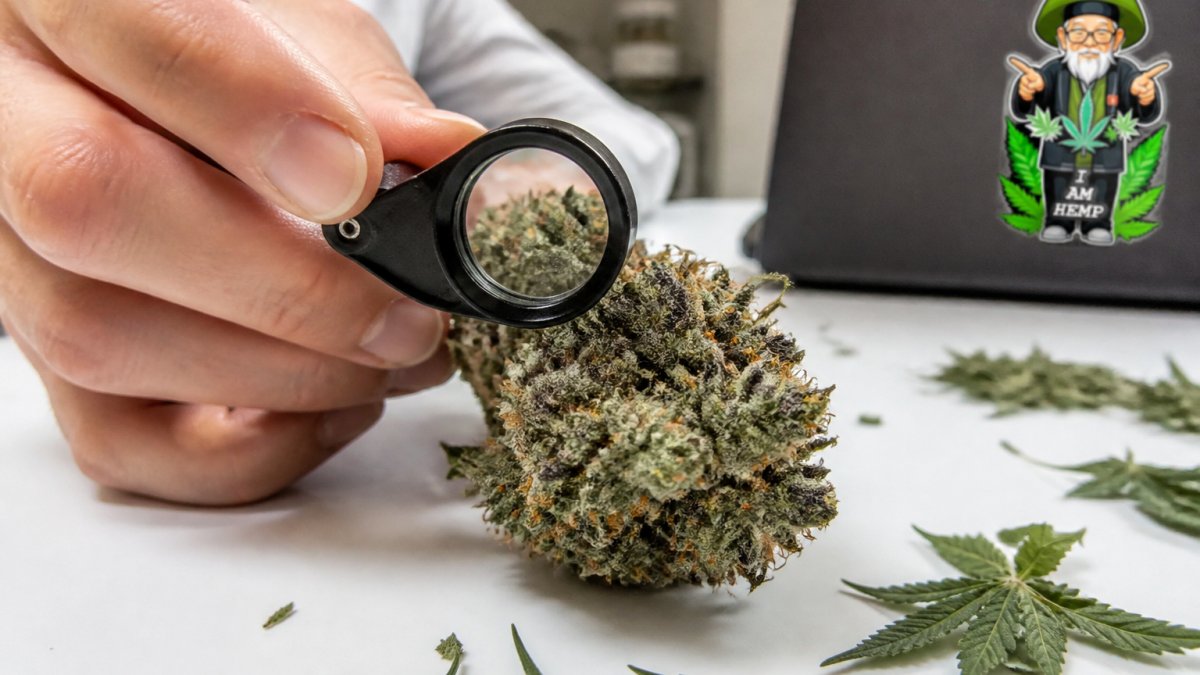
The benefits of indoor grown hemp come down to control, and control is what you are actually buying. Indoor environments let growers hold temperature, humidity, vapor pressure deficit, and light intensity within narrow bands through the entire flowering cycle. That stability supports even cannabinoid profile development, protects delicate terpene preservation, and reduces the batch-to-batch swing that outdoor crops carry.
Why Small-Batch Premium Hemp Is Inherently More Expensive
This is the part most price comparisons skip: economies of scale. Industrial-grade hemp is grown in volume, often outdoors, harvested by machine, and processed in bulk lots where a single percentage point of loss is absorbed across thousands of pounds. Small-batch premium hemp runs the opposite way. A craft grower may run a few hundred plants per cycle, hand-trim each one, and cure in small lots where every ounce matters.
The cost per finished gram rises for structural reasons, not marketing ones:
- Fixed costs spread over fewer units. HVAC, lighting, security, and compliance overhead are largely fixed. A large facility spreads them across far more sellable weight than a small one.
- Hand labor replaces machine labor. Machine trimming is fast and cheap but strips trichome heads. Hand trimming preserves them, and hand labor is the single largest line item in most craft operations.
- Selective harvest. Premium growers often harvest in stages, taking tops first and letting lower sites mature. That improves quality but spreads labor across more days.
- Lower yield per square foot. Pushing for maximum yield often means pushing nutrients and light in ways that dilute terpene expression. Premium growers frequently accept lower yield to protect quality.
The result is a value-to-cost trade-off: you are paying for a smaller, slower, more attentive production model. That is the honest justification for the price gap, and it is the same logic that applies to small-batch coffee, wine, or chocolate.
What Consistency Actually Buys You
For consumers, the practical difference shows up in flavor and effect. Indoor flower tends to deliver a cleaner, more repeatable experience because the grower controlled the variables. If you liked the last batch, the next one is more likely to match it. That repeatability is what you pay for, and it is why indoor strains command higher wholesale benchmarks than outdoor equivalents of similar potency.
The Importance of COA in Hemp: Testing Is Not Free
The importance of COA in hemp cannot be overstated: a certificate of analysis is the only independent proof that a product is what the seller claims. Every batch we sell at I AM HEMP is lab-tested and paired with a COA. Testing is not free. Potency testing, heavy metal screening, pesticide panels, and microbial checks each carry a per-sample cost, and full-panel testing is the most expensive option.
What a Full Panel Test Actually Screens For
A full panel typically covers cannabinoid potency, residual solvents, pesticides, heavy metals, microbials, and mycotoxins. Third-party lab testing through an independent lab is the standard that separates serious producers from the rest. Skipping panels lowers the price, but it also removes the evidence.
| Test Panel | What It Screens For | Why It Raises Cost |
|---|---|---|
| Potency | Cannabinoid percentages | Per-sample lab fee |
| Heavy metals | Lead, arsenic, cadmium | Specialized equipment |
| Pesticides | Residual chemical agents | Multi-analyte panel |
| Microbials | Mold, yeast, bacteria | Culture and screening time |
| Residual solvents | Extraction chemical residue | Only for extracted products |
Extraction, Processing, and Post-Harvest Losses
Extraction turns raw biomass into concentrates, and every method carries a different cost profile. CO2 extraction requires expensive equipment and skilled operators. Solventless methods like live hash rosin use ice, water, heat, and pressure, which preserves terpene preservation and bioavailability but yields far less finished product per gram of input. That low extraction efficiency is a direct cost driver.
The Hidden Cost Nobody Prices In: Post-Harvest Losses
This is the cost layer most pricing explainers skip entirely. Between harvest and the jar, a large share of the original plant weight disappears, and every gram lost has to be paid for by the grams that survive.
Drying and curing shrink. Freshly harvested flower is mostly water. As it dries and cures, it loses a substantial portion of its weight.
Trimming removes material. Sugar leaves, fan leaves, and stems are stripped away. Hand trimming removes more slowly but more precisely, and the removed material is either discarded or diverted to lower-value extraction. Either way, the sellable flower weight drops.
1 Gram Live Hash Rosin (T2)| 78.6% →
Extraction yield is a fraction of input. Solventless hash and rosin production is especially lossy. A batch of flower or hash goes in, and only a fraction comes out as finished rosin. The rest stays behind in the press bag or wash water.
Curing and storage losses continue. Improper curing process management, fluctuating humidity, or poor packaging can degrade terpenes and cannabinoids over time. Mold, mildew, or over-drying can render an entire lot unsellable. Premium producers absorb these losses by discarding failed batches rather than selling them.
Why This Matters for the Price You Pay
Put the layers together and the math is simple: a premium producer pays for cultivation, harvest, drying, curing, trimming, and extraction on the full input weight, but only sells the surviving fraction. Commodity operations reduce this loss by machine trimming, skipping cure time, or selling lower-grade material into extract or biomass channels. Premium operations do not, and the difference shows up at the register.
Post-harvest handling also affects shelf stability. A properly cured and stored product holds its chemistry longer, which means less waste for the buyer. That durability is part of what the premium covers.
How to Buy Lab Tested THCA Flower Online Without Overpaying
To buy lab tested THCA flower online without overpaying, match the price to verifiable evidence rather than to marketing language. Ask three questions before checkout: Is there a current COA for this exact batch? Does the panel cover potency, heavy metals, and pesticides? Is the sourcing traceable to a specific farm?
- Confirm the COA matches the batch number on the product
- Check the testing date (recent batches only)
- Verify the panel includes heavy metals and pesticides
- Confirm the lab is independent and third-party
- Review the cultivation method (indoor vs outdoor)
At I AM HEMP, we source exclusively from trusted American farms and publish lab results so you can check the evidence yourself. Our USDA hemp production guidance context matters here: legal hemp must stay within federal THC limits, and testing is how that is confirmed.
What 'Premium' Actually Means: A Definition Breakdown
Premium hemp is a designation for cannabis flower or extract that has passed independent full-panel testing, been cultivated under controlled conditions, and been handled to preserve its cannabinoid and terpene content. The word alone means nothing. The evidence behind it means everything.
Three things separate true premium from a marketing label:
- Verifiable testing. A current COA from an independent lab.
- Controlled cultivation. Indoor or carefully managed grows with consistent genetics.
- Preserved chemistry. Proper curing, storage, and solventless or clean extraction.
Regulatory compliance and manufacturing overhead sit behind all three. A producer who tests every batch, maintains clean facilities, and absorbs post-harvest losses cannot match the price of one who does not. That gap is the honest answer to why premium hemp costs more.
Conclusion: Paying for What You Can Verify
The challenge with premium hemp is that the label alone proves nothing. You have to verify the testing, the sourcing, and the cultivation behind every batch. That verification is exactly what you are paying for when you choose premium.
At I AM HEMP, we make that verification simple. Every product is sourced from trusted American farms, lab-tested with published COAs, and shipped in discreet, inconspicuous packaging with fast delivery. From our 1 Gram Live Hash Rosin to our solventless cartridges and disposables, each batch is handpicked and documented.
Choose options with I AM HEMP and get premium hemp you can actually verify.
Frequently Asked Questions
What factors contribute to the higher price of premium hemp flower?
Four cost centers drive the gap: controlled indoor cultivation (lighting, HVAC, and labor run year-round), full-panel third-party lab testing on every batch, hand trimming and a slow curing process, and low yield rates on small-batch harvests. Each step adds cost but also protects the cannabinoid profile and terpene preservation that cheaper, mass-produced biomass typically loses.
How do I buy lab tested THCA flower online without getting burned?
Ask for the certificate of analysis before you order, not after. A legitimate COA lists the batch number, the testing lab's name, and results for potency, pesticides, heavy metals, and microbials. Match the batch number on the COA to the batch number on the product page or packaging. If a seller cannot produce a batch-specific COA on request, treat that as your answer.
Does the curing and trimming process really impact the price of hemp?
Yes. Hand trimming preserves trichomes that machine trimmers knock off, and a slow cure over two to four weeks stabilizes moisture so the flower burns clean and keeps its terpenes. Both steps are labor hours, and labor is one of the largest line items in premium hemp. Skipping them is how budget flower gets to a lower price, and it shows in flavor and shelf stability.
What is the difference between biomass hemp and premium craft hemp?
Biomass is bulk plant material grown for volume and sold by weight to processors, often with minimal trimming or curing. Premium craft hemp is grown in smaller batches, harvested at peak trichome maturity, hand-trimmed, and tested per batch. That difference in handling shows up in the cannabinoid profile, the terpene content, and the price per gram.
