

Is Indoor Grown Hemp Better? A 2026 Buyer's Guide
Table of Contents
- Indoor vs Greenhouse THCA Flower: What Actually Changes
- Cannabinoids, Terpenes, and Flower Quality by Grow Method
- Is Indoor Hemp Flower Worth It? Price, Consistency, and Yield
- How to Choose High-Quality Hemp Flower Before You Buy
- Reading a THCA Flower Lab Report: COAs, Potency, and Contaminants
- Indoor Grown Hemp in Practice: Strains That Show the Difference
- Conclusion: Matching the Grow Method to What You Actually Want
- Frequently Asked Questions
Last Updated: October 6, 2026
Indoor vs Greenhouse THCA Flower: What Actually Changes
Indoor-grown hemp is cultivated entirely under a controlled environment, letting growers manage temperature, humidity, light intensity and airflow through every stage of growth. That control is why indoor flower costs more than greenhouse or outdoor-grown flower. At I AM HEMP, we source indoor, greenhouse and outdoor material from American farms, so we see the trade-offs up close. The short answer: indoor-grown hemp is not automatically better, but it is more consistent, and consistency is what most buyers pay for.
Controlled Environment vs Sunlight and Season
A controlled environment removes weather from the equation. Growers set temperature, humidity and light cycles, and run CO2 enrichment and precise nutrient schedules, so crop cycles repeat predictably, harvest to harvest. Sunlight and season do the opposite.
What most guides miss is that "indoor" describes the room, not the result. A poorly run indoor room produces worse flower than a well-run greenhouse.
Where Outdoor Grown Hemp Fits In
Outdoor-grown hemp is the lowest-cost method because sunlight is free and no grow lights run.
That does not make outdoor flower bad. It makes it variable. Two batches from the same field can differ in bud appearance, aroma and potency depending on the season.
If price matters most and you accept batch-to-batch variation, outdoor flower delivers value. If you want the same experience every order, indoor is the safer bet.
Cannabinoids, Terpenes, and Flower Quality by Grow Method
Grow method does not directly set potency. Genetics set the ceiling, and the environment determines how close a plant gets to it. What indoor, greenhouse, and outdoor growing change is the stability of the conditions that drive secondary metabolite production, measurable on a lab report, not just visible in a jar.
What the Environment Actually Controls
Three levers do most of the work:
- Light intensity and spectrum. Cannabis responds to daily light integral (DLI), the total photons delivered per day. Indoor rooms hold a fixed DLI year-round; greenhouses swing with the season; outdoor plants get whatever the sky provides. Consistent DLI supports even maturation across the canopy.
- Temperature and vapor pressure deficit (VPD). VPD is the gap between how much moisture the air holds and how much it can hold at a given temperature. When VPD drifts too high, stomata close, transpiration stalls, and development slows. Indoor rooms hold VPD in a target band; outdoor plants ride the weather.
- Day/night temperature differential. A moderate night-time temperature drop is associated with terpene retention in many cultivars. Indoor growers can dial that differential in; greenhouse and outdoor growers depend on the forecast.
None of these levers raises the genetic ceiling. They determine whether a plant reaches it, and whether every plant in the room reaches it at the same time.
What a Lab Report Can and Cannot Tell You
A certificate of analysis (COA) from an independent lab reports total THC, total THCA, minor cannabinoids, and often a terpene panel.
Two batches of the same cultivar from the same farm can differ by several percentage points in total THCA across harvests, and that spread is often wider for outdoor and greenhouse flower than for indoor flower from a single controlled run.
Why Indoor Tends to Look and Smell More Uniform
Indoor's advantage is not stronger flower, it is flower that is closer to identical from plant to plant and harvest to harvest. Even light distribution, steady VPD, and a controlled dry-and-cure environment reduce the variance that shows up as uneven trichome development, color, or aroma across a batch. Greenhouse and outdoor flower can match indoor on every quality marker; the difference is predictability.
Quality Markers You Can Actually Observe
- Dense, well-trimmed buds with intact structure and no loose leaf
- Visible trichomes that are intact rather than knocked off in handling
- A pronounced aroma when the container is opened, not just when the flower is ground
Greenhouse and outdoor flower can hit all five. Indoor hits them more often, batch after batch, which is the real reason buyers pay more for it.
Is Indoor Hemp Flower Worth It? Price, Consistency, and Yield
Indoor hemp flower is worth it when consistency and appearance matter more than price. It is not worth it if you are buying trim for extracts or rolling on a budget, where greenhouse and outdoor material do the job for less. The useful question is not "is indoor better" but "does the premium buy something I actually care about."
Where the Price Premium Comes From
Indoor flower carries the highest price per gram because production costs are highest. The main cost drivers, roughly in order of impact:
- Electricity for lighting. High-intensity discharge and LED fixtures run 12 hours a day in both vegetative growth and flower, and the load scales with canopy square footage.
- HVAC and dehumidification. Removing light-generated heat and holding VPD in a target band runs compressors and fans around the clock.
- CO2 enrichment. Sealed rooms often supplement CO2 to push photosynthesis rates, adding supply cost and requiring tighter sealing.
Greenhouse operations cut lighting cost by using the sun and HVAC cost via passive ventilation, but still pay for supplemental light in shoulder seasons and climate control during extremes. Outdoor operations cut lighting and HVAC almost entirely, but lose control over weather exposure and typically get one harvest window per year instead of multiple turns.
Environmental Trade-Offs, Stated Plainly
Indoor flower carries a higher energy footprint per gram than greenhouse or outdoor flower, the honest trade-off most buyer guides skip. On electricity the comparison is not close: indoor is the most electricity-intensive of the three methods, greenhouse sits in the middle because it supplements natural light, and outdoor uses essentially no grow lighting. Water and land tell a different story.
A Decision Framework by Buyer Type
| Buyer priority | Best-fit method | Why |
|---|---|---|
| Lowest price per gram | Outdoor | No lighting or HVAC cost passed through |
| Same experience every order | Indoor | Controlled conditions reduce batch-to-batch variance |
| Balanced value and quality | Greenhouse | Sunlight cuts cost; some climate control protects quality |
| Extracts and pre-rolls | Outdoor or greenhouse | Potency and consistency matter less when the flower is processed |
| Lower electricity footprint | Outdoor or greenhouse | Grow lighting is the largest single energy input |
| Bag appeal and shelf presentation | Indoor | Even light and trim produce more uniform buds |
How to Tell If the Premium Is Justified
Before paying an indoor premium, check three things on the listing or the COA:
- Is the cultivation method stated? If the seller cannot say whether the flower was grown indoors, in a greenhouse, or outdoors, the premium is unverified.
- Is the COA batch-specific? A premium indoor price with a generic or reused COA is a marketing claim, not a quality claim.
- Does the batch-to-batch record hold up? If the same cultivar from the same seller shows wide swings in total THCA across recent batches, the indoor premium is not buying consistency.
If all three check out, the premium is real. If any one fails, greenhouse flower from a seller who documents their batches is usually the better buy.
THCa Flower|Zookies|AAA Indoor Mediums|25.02%|(H) →
How to Choose High-Quality Hemp Flower Before You Buy
Learning how to choose high-quality hemp flower comes down to three checks: the lab report, the appearance, and the source. Start with the certificate of analysis, it should be batch-specific, not generic. Then look at the flower: dense structure, visible trichomes, a strong aroma when the container opens.
A practical checklist before you order:
- COA is batch-specific and dated
- Potency is listed with a testing method
- Contaminant panel includes pesticides, heavy metals, mold and microbials
If a listing is missing any of these, ask before you buy. Reputable sellers answer.
Reading a THCA Flower Lab Report: COAs, Potency, and Contaminants
A THCA flower lab report, or certificate of analysis, is an independent test result showing what is in a specific batch. It is the only document that verifies potency and confirms the flower is free of contaminants.
Read it in this order:
- Batch match. The COA must reference the same batch or lot you are buying.
- Potency. Look for total THCA and the testing method used.
- Contaminants. Pesticides, heavy metals, mold, yeast and microbials should all be listed with results.
- Lab identity. The testing lab should be named and independent.
Independent testing matters because flower is an agricultural product. Mold and pest pressure are real risks in any grow, indoor included. A COA is how you confirm a batch cleared those checks.
A COA that is not tied to your specific batch tells you nothing about what is in your jar. Sellers who reuse one report across many drops are the ones to avoid.
Indoor Grown Hemp in Practice: Strains That Show the Difference
Indoor growing shows its value most clearly in strains with complex terpene profiles, where small environmental shifts change the aroma.
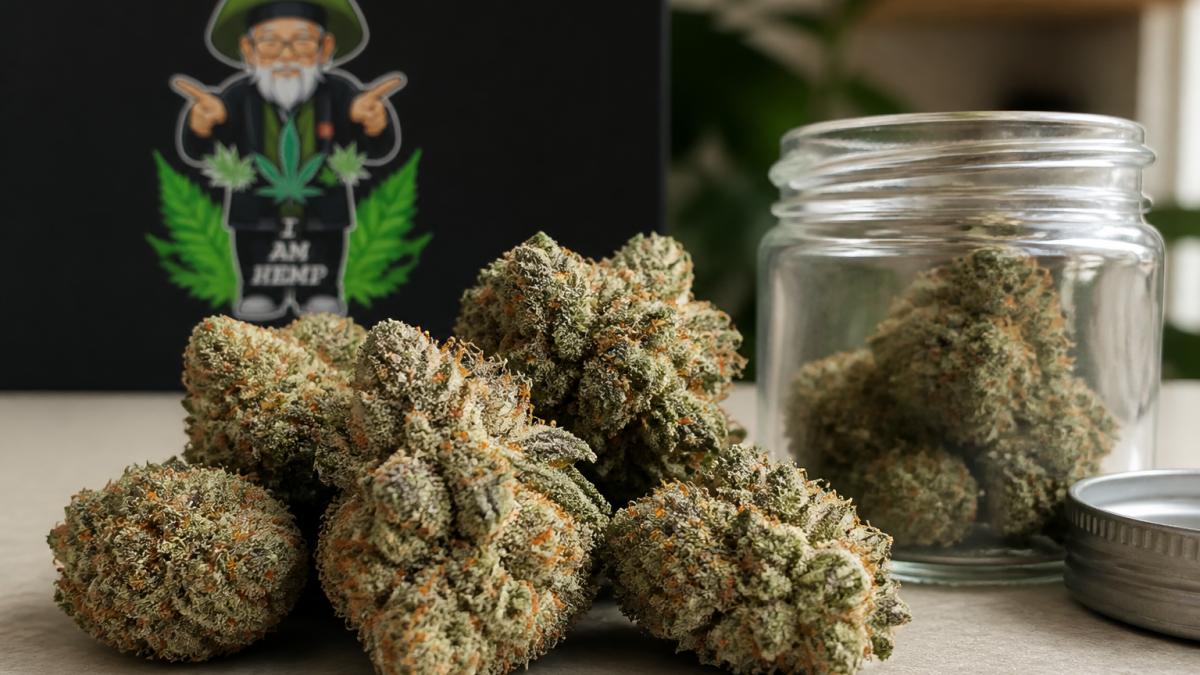
Zookies (AAA Indoor Mediums, 25.02%) crosses Animal Cookies with Gorilla Glue #4.

Bolo Runtz (Exotic) shows the appearance side of indoor quality: dense, carefully trimmed buds with deep purple accents, orange hairs and a heavy trichome coating.
If you want to see how much method matters, smoke an indoor batch and a greenhouse batch of the same strain back to back.
Conclusion: Matching the Grow Method to What You Actually Want
The honest answer to whether indoor-grown hemp is better is that it depends on your priorities, not on a ranking. Indoor wins on consistency, appearance and repeatability. Greenhouse sits in the middle on cost and control.
What separates a good purchase from a bad one is the COA, not the label. A batch-tested greenhouse flower beats an untested indoor flower every time.
At I AM HEMP, we source from trusted American farms and lab-test every batch, so you can check the COA before you commit. Our indoor and exotic strains ship in discreet packaging, and our handpicked selection covers both high-potency flower and budget-friendly trim.
Frequently Asked Questions
Does indoor-grown hemp have higher THCA levels than greenhouse or outdoor?
It can, but not automatically. Indoor cultivation lets growers control temperature, humidity, light intensity, and CO2, which supports even development and limits stress that can stall cannabinoid production. That control is why indoor flower often lands in the mid-to-high 20s for THCA. Greenhouse and outdoor crops can reach similar numbers with good genetics and a favorable season, so the grow method sets the ceiling while the harvest and testing decide the actual result. Always check the COA for the specific batch rather than assuming any method guarantees potency.
Is indoor hemp flower worth the higher price compared to greenhouse?
It depends on what you value. Indoor-grown hemp costs more because of energy consumption, climate control equipment, and smaller crop cycles. In exchange, you typically get tighter consistency between harvests, denser buds, and more reliable terpene retention. Greenhouse flower like the GMO Greenhouse Tops at $30.00 delivers strong strain character for less. If bag appeal and repeatable quality matter most, indoor justifies the premium. If you want bold flavor at a lower cost, greenhouse is a solid choice.
How can I tell if hemp flower is high quality before ordering?
Start with the lab report. A legitimate COA shows cannabinoid potency, terpene content, and pass/fail results for pesticides, heavy metals, mold, and microbials, tied to a specific batch number. Then look at the flower itself: dense, well-trimmed buds with visible trichomes, vivid color, and a strong aroma when the bag opens. Ask whether the seller sources from American farms and whether you can trace a product to its harvest. Vague claims without documentation are the clearest warning sign.
What should a THCA flower lab report actually show?
A complete COA lists the batch or lot number, the testing lab, the date, and results for total THCA and other cannabinoids, plus terpene profiles where available. It should also include contaminant panels: pesticides, heavy metals, residual solvents, mold, yeast, and microbials. Independent testing means the grower did not run the analysis in-house. If a listing shows potency numbers without a downloadable COA, or the COA has no batch identifier, you cannot verify that the report matches the flower you receive.
Choosing flower without a lab report is a coin flip, no matter how good the photos look. I AM HEMP tests every batch, publishes the COAs, and ships in discreet, inconspicuous packaging so you know exactly what is in the jar before it reaches your door. Browse our handpicked indoor strains and compare the certificates yourself.
