

Will THCA Flower Get You Stoned? The Truth About THCA
Table of Contents
- Will THCA Flower Get You Stoned? The Short Answer
- THCA vs THC: What the Molecular Difference Actually Means
- The THCA Decarboxylation Process: How Heat Converts THCA to THC
- THCA Flower vs Regular Weed: Key Differences for Buyers
- Raw vs Heated THCA: What Changes When You Light Up
- Is THCA Flower Legal? Farm Bill Compliance Explained
- Best Indoor THCA Flower Strains 2026: What to Look For
- Drug Testing, Storage, and Quality Control: What Buyers Miss
- Frequently Asked Questions
Last Updated: September 21, 2026
Will THCA Flower Get You Stoned? The Short Answer
No, THCA flower will not get you stoned in its raw form. THCA (tetrahydrocannabinolic acid) is a non-psychoactive cannabinoid, meaning it does not produce intoxication on its own. It only becomes psychoactive after decarboxylation, a heat-driven chemical reaction that converts THCA into delta-9 THC, the compound responsible for the "high" people associate with cannabis. This guide from I AM HEMP breaks down exactly how that conversion works, why raw flower behaves differently from heated flower, and what that means for anyone buying THCA flower in 2026.
THCA vs THC: What the Molecular Difference Actually Means
The only structural difference between THCA and THC is a carboxyl group. THCA carries an extra carboxyl group attached to its molecular structure; THC does not. That single group is why THCA cannot bind effectively to CB1 receptors in the endocannabinoid system, the receptors responsible for the psychoactive effects of cannabis.
National Center for Biotechnology Information overview of cannabinoid pharmacology
The THCA Decarboxylation Process: How Heat Converts THCA to THC
Decarboxylation is the thermal conversion of THCA into THC. It happens when THCA is exposed to heat, whether from a lighter, a vaporizer, or an oven. The carboxyl group breaks off as carbon dioxide, and what remains is psychoactive THC.
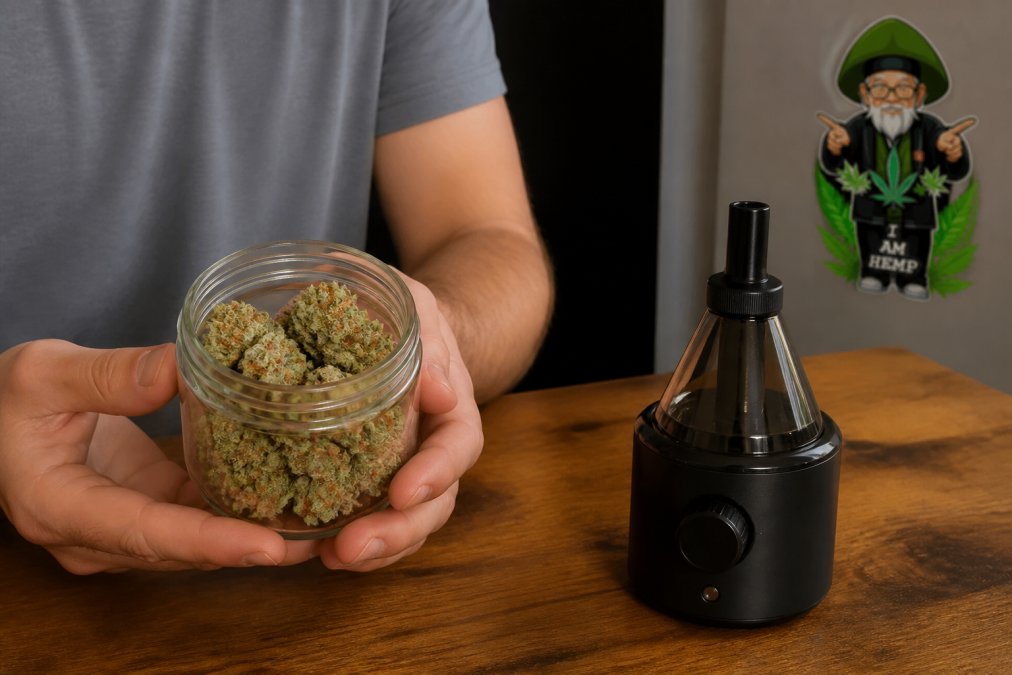
Temperature and duration both matter:
- Combustion (smoking): Immediate conversion. The flame temperature is far above the threshold needed for full decarboxylation.
- Vaporization: Controlled conversion. Lower temperatures preserve more terpenes while still converting THCA to THC.
- Edible decarboxylation: Requires sustained heat over time before infusion, since raw flower mixed into food will not convert on its own.
THCA Flower vs Regular Weed: Key Differences for Buyers
THCA flower and regular weed are the same plant at different points on the chemical timeline. Regular cannabis sold for its intoxicating effects has typically already undergone some decarboxylation, or it is understood that the buyer will apply heat before use. THCA flower is harvested and sold specifically to preserve high THCA content, which is why it is often marketed as hemp-derived and non-psychoactive in its raw state.
- Labeling and compliance: THCA flower is typically sold under hemp-derived frameworks, which affects how it can be marketed.
- Potency: THCA percentages on indoor flower can run high, but that number describes the acid form, not THC content.
- Experience: Raw consumption produces no high; heated consumption produces effects similar to traditional cannabis.
Raw vs Heated THCA: What Changes When You Light Up
Raw THCA flower produces no intoxication. Chewing, juicing, or eating raw flower delivers THCA and other cannabinoids without the psychoactive conversion, so the experience is closer to a wellness product than a recreational one. Reported effects from raw consumption tend to be described as anti-inflammatory or appetite-related rather than euphoric, though individual response varies and research on raw THCA in humans is still limited.
The Entourage Effect in THCA Flower
What most guides miss is that terpenes and minor cannabinoids still shape how the resulting THC feels. Two strains with identical THCA percentages can hit very differently because the terpene profile, myrcene, limonene, caryophyllene, pinene, linalool, and others, modulates the experience. Myrcene-heavy cultivars are commonly described as more sedating; limonene-forward ones as more uplifting. That is the entourage effect in practice.
How Consumption Method Changes the Experience
- Combustion (smoking): Fastest onset, highest conversion, but the flame also burns off terpenes and produces combustion byproducts. Effects hit within minutes.
- Vaporization: Lower temperatures convert THCA while preserving more terpenes. Onset is slightly slower than smoking but the flavor and effect profile tend to be fuller.
- Edibles (decarboxylated first): Slowest onset, often 30 to 90 minutes, and the strongest per-milligram effect because the liver converts delta-9 THC into 11-hydroxy-THC, a more potent metabolite. Raw flower mixed into food without decarboxylation will not produce this effect.
- Raw consumption: No high. THCA stays in acid form.
What This Means for Buyers
If you want the intoxicating experience, you need heat, and you need enough of it. A weak or brief heat source can leave you with a partial conversion, some THCA, some THC, and a weaker, shorter effect than the label suggests. If you want the non-intoxicating experience, raw is the route, but understand that you are buying a different product experience entirely, not a weaker version of the same one.
Is THCA Flower Legal? Farm Bill Compliance Explained
THCA flower occupies a narrow legal lane under the 2018 Farm Bill, which legalized hemp and hemp-derived products containing no more than 0.3% delta-9 THC on a dry weight basis. Because THCA itself is not delta-9 THC, flower with high THCA content can fall within that framework at the point of sale, even though heating it produces THC.
USDA hemp production program guidance
Best Indoor THCA Flower Strains 2026: What to Look For
The best indoor THCA flower strains in 2026 share a few traits: verified lab testing, visible trichome coverage, and terpene profiles that survive curing. Indoor cultivation gives growers control over light, humidity, and temperature, which tends to produce denser buds and richer terpene expression than outdoor or greenhouse grows.
When evaluating indoor flower, look for:
THCa Flower 29.4% | Mixed Strain Exotic →
- A current certificate of analysis (COA) covering potency and contaminants
- Terpene content listed separately from total cannabinoids
- Bud structure and trichome density visible in product photos
- Harvest and batch dates, since older flower degrades
FDA information on cannabis and cannabis-derived products
Drug Testing, Storage, and Quality Control: What Buyers Miss
Most THCA articles stop at "heat converts it to THC" and never follow the molecule into the body. That is the gap that matters most for anyone with an employer screen, a probation requirement, or a DOT-regulated job.
Why THCA Can Trigger a Positive Drug Test
Standard cannabinoid screens, the immunoassay panels used by most employers and labs, do not test for THC itself. They test for THC-COOH (11-nor-9-carboxy-THC), the primary urinary metabolite of delta-9 THC. The body produces that metabolite when delta-9 THC is metabolized, regardless of whether the delta-9 THC arrived as delta-9 THC or was created in real time by decarboxylating THCA during smoking or vaping.
That means the route of consumption drives the risk:
- Smoked or vaped THCA flower: High risk. Combustion and vaporization convert THCA to delta-9 THC before it reaches your lungs, and the resulting metabolite is indistinguishable from conventional cannabis use on a standard screen.
- Raw THCA flower (chewed, juiced, or eaten uncooked): Lower but not zero risk. Some conversion can occur with chewing and digestion, and individual metabolism varies. Do not treat raw consumption as a guaranteed negative.
- THCA edibles that were decarboxylated during production: Same risk profile as conventional THC edibles.
Storage: Preventing Premature Decarboxylation
THCA is not shelf-stable forever. Heat, light, oxygen, and time all push the molecule toward delta-9 THC, which is why a jar that sat in a hot delivery truck or a sunny windowsill can arrive weaker, or measurably different, than the COA describes.
Practical storage rules:
- Keep it cool. Room temperature in a dark cabinet is fine. Avoid cars, garages, and anywhere that swings above roughly 80°F for extended periods.
- Block light. Amber or opaque glass, or a sealed container inside a drawer, slows degradation.
- Limit air exchange. Airtight jars reduce oxidation. Every time you open the jar, you reset the clock a little.
- Do not refrigerate and then leave it out repeatedly. Condensation cycling introduces moisture, which invites mold and microbial issues.
- Watch the calendar. Older flower loses both THCA potency and terpenes. If a COA is more than a few months old, ask for a current batch document.
Reading a COA for THCA Flower
A Certificate of Analysis is only useful if you know which panels to look at. A marketing page that says "lab tested" tells you nothing. The actual document should be batch-specific and from an accredited third-party lab.
| Panel | What to Look For | Why It Matters |
|---|---|---|
| Potency | THCA %, delta-9 THC %, total cannabinoids | Confirms the acid form is high and delta-9 is under the 0.3% dry-weight threshold |
| Terpenes | Individual terpene list, not just "total terpenes" | Shows whether the entourage effect is real for that batch |
| Pesticides | Full panel, not a single compound | Flags residual agricultural chemicals |
| Heavy metals | Lead, arsenic, cadmium, mercury | Cumulative exposure risk |
| Residual solvents | Relevant for extracted products, less for flower | Confirms no solvent contamination |
| Microbials | Total yeast and mold, E. coli, salmonella | Safety for inhalation |
| Batch and test dates | Match the batch you are buying | An old COA does not describe a new harvest |
Sourcing and Traceability
Ask three questions before buying: Which farm grew it? Which lab tested it? What is the batch number on the COA, and does it match the jar? Reputable sellers publish batch-specific documents and can name the cultivator. If a seller cannot answer those questions, the "lab tested" claim is marketing, not verification.
FDA information on cannabis and cannabis-derived products
Frequently Asked Questions
Will THCA flower get me high if I smoke it?
Yes. THCA flower itself is not psychoactive, but when you smoke, vape, or combust it, heat triggers decarboxylation. That process removes a carboxyl group from the THCA molecule and converts it into THC, which binds to CB1 receptors and produces intoxication. Raw THCA flower eaten straight from the jar will not get you high because your body does not convert it efficiently without heat.
Does THCA flower show up on a drug test?
It can. Standard urine tests screen for THC metabolites, not THCA itself. Once you heat THCA flower, it becomes THC, and your body breaks that down into metabolites like THC-COOH. Those metabolites are what tests detect. If you smoke or vape THCA flower regularly, there is a real chance of a positive result. Anyone facing testing should treat THCA flower the same as regular cannabis.
Is THCA flower legal under the Farm Bill?
THCA flower derived from hemp with less than 0.3% delta-9 THC on a dry weight basis falls under the 2018 Farm Bill definition of legal hemp. That said, state laws vary, and some states have moved to restrict or ban THCA products specifically. Always check your state's rules before ordering, and buy from sellers who provide a certificate of analysis for every batch.
How long does a THCA high last compared to regular weed?
The high from heated THCA flower lasts about the same as regular cannabis, typically one to three hours depending on potency, your tolerance, and how you consume it. Vaporization tends to come on faster and fade sooner than smoking. The intensity depends on the THC level after conversion, so a 29% THCA strain can hit noticeably harder than a lower-potency option.
