

Is THCA Flower Legal in All States? 2026 Guide
Table of Contents
- THCA Flower Legality in 2026: The Short Answer
- Federal Law: Why THCA Flower Sits in a Legal Gray Area
- State-by-State THCA Flower Legal Status in 2026
- THCA vs Delta-9 THC Legality: Two Cannabinoids, Two Rulebooks
- How to Verify THCA Lab Reports Before You Buy
- Shipping Hemp-Derived THCA Across State Lines: What You Need to Know
- What to Do If Law Enforcement Questions Your THCA Flower
- Conclusion: Know Your State Before You Order THCA Flower
- Frequently Asked Questions
Last Updated: September 21, 2026
THCA Flower Legality in 2026: The Short Answer
No, THCA flower is not legal in all states in 2026. At I AM HEMP, we field this question daily: legality depends on where you live and how your state regulates hemp-derived cannabinoids. Federal law permits hemp-derived THCA under the 2018 Farm Bill, but many states have enacted bans or potency caps that override it at retail.

Federal Law: Why THCA Flower Sits in a Legal Gray Area
THCA flower is federally legal because the 2018 Farm Bill defines hemp as cannabis containing no more than 0.3% Delta-9 THC by dry weight, measuring Delta-9, not total THC. THCA is a non-psychoactive precursor that becomes Delta-9 THC when heated.

State-by-State THCA Flower Legal Status in 2026
State law is where the real answer lives. A state can legalize recreational cannabis and still restrict hemp-derived THCA, or ban cannabis entirely while permitting hemp products. The table below groups states by regulatory posture, because that determines whether you can buy THCA flower.
| Regulatory posture | What it means for THCA flower | Representative states |
|---|---|---|
| Hemp-permissive | Retail THCA flower sales allowed; compliance measured against the 0.3% Delta-9 cap | Most states without a total-THC statute |
| Total-THC states | "Hemp" redefined to include THCA, so flower that tests high in THCA fails the state definition | States that adopted total-THC language in their hemp statutes |
| Potency-cap states | Delta-9 or total-THC caps set below what most flower can meet | States with per-serving or per-container milligram caps |
| Outright bans | Hemp-derived intoxicating cannabinoids prohibited; possession can be charged as a controlled substance violation | A minority of states, mostly those with strict cannabis prohibitions |
| Active legislation | Bills filed or passed with future effective dates that will move the state between categories | A growing share of states each session |
How States Actually Restrict THCA Flower
Three mechanisms do almost all the work; knowing which one your state uses tells you whether your product is at risk.
States With Active Legislation or Pending Deadlines
Many states have hemp-derived cannabinoid bills moving at any given time, often with effective dates before the next legislative session. Check your state's current statute before every order, not once a year.
- The state's definition of "hemp", does it say Delta-9 only, or total THC?
- Any potency cap, and whether it is per serving, per container, or by dry weight
- Whether hemp-derived intoxicating cannabinoids are scheduled or prohibited by name
- The effective date of the most recent amendment, not the date the bill passed
The Local Layer Most Guides Skip
State law is not the bottom of the stack. Counties and municipalities can restrict retail sales, impose zoning limits on hemp businesses, or ban smoke shops even when the state permits the product. The result: legal to possess statewide, legal to buy in the next county over, and illegal to sell at the shop down the street.
THCA vs Delta-9 THC Legality: Two Cannabinoids, Two Rulebooks
THCA and Delta-9 THC are treated differently under federal law even though they come from the same plant and THCA converts to Delta-9 when heated. Delta-9 THC is psychoactive and capped at 0.3% in hemp, regulated as a controlled substance above that. THCA is not psychoactive raw, so it falls outside the cap as long as Delta-9 stays compliant.
| Factor | THCA | Delta-9 THC |
|---|---|---|
| Federal status in hemp | Legal under 0.3% Delta-9 cap | Legal only under 0.3% in hemp |
| Psychoactive when raw | No | Yes |
| Converts to Delta-9 | Yes, via decarboxylation | N/A |
| State treatment | Varies widely, some bans | Regulated as cannabis in most states |
| Shipping across state lines | Allowed if compliant | Restricted in most states |
How to Verify THCA Lab Reports Before You Buy
Verifying THCA lab reports means checking that a Certificate of Analysis (COA) comes from an accredited third-party lab, matches your batch, and shows Delta-9 THC under 0.3% by dry weight. A COA is the only document that proves a specific batch passed testing.
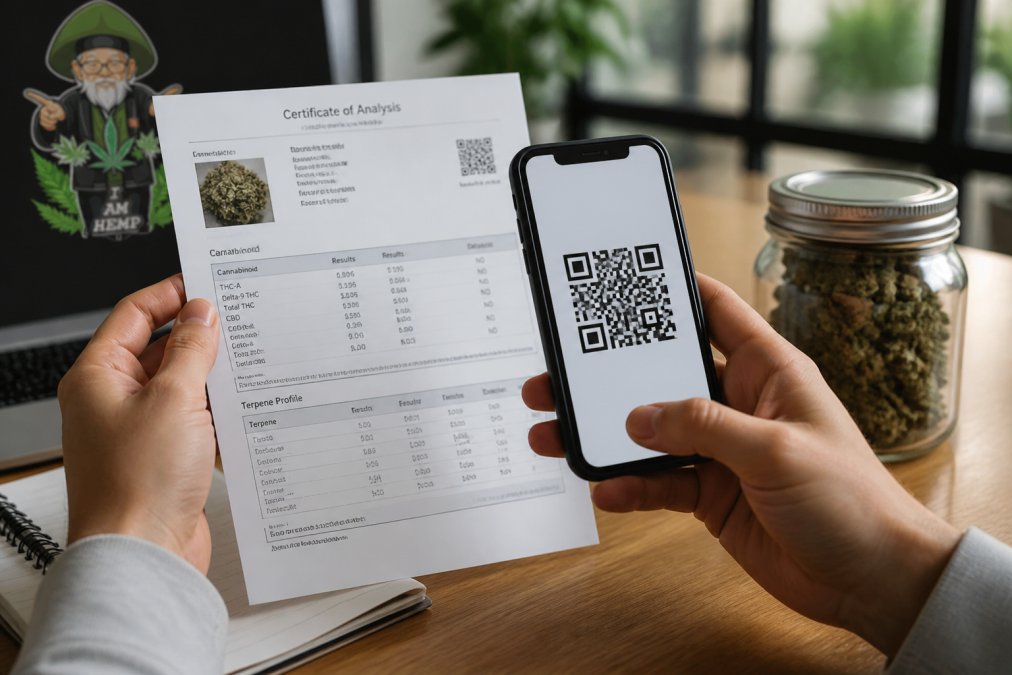
Here's the verification checklist we recommend:
- Confirm the COA lists a batch or lot number that matches your product
- Check that the testing lab is ISO 17025 accredited or state-licensed
- Verify the Delta-9 THC result reads below 0.3% by dry weight
- Look for heavy metals, pesticides, residual solvents, and microbial panels, not just potency
- Scan the QR code on the COA to confirm it resolves to the lab's own domain, not a PDF hosted by the seller
Shipping Hemp-Derived THCA Across State Lines: What You Need to Know
Shipping hemp-derived THCA across state lines is federally legal when the product stays under the 0.3% Delta-9 threshold and the destination state permits hemp sales. But carriers and destination states apply their own rules, and a package leaving a compliant origin state can still be seized if the receiving state has banned the product.
THCa Flower 29.4% | Mixed Strain Exotic →
The Part Almost No Guide Covers: Carrying It Yourself
Shipping is the low-risk path. Driving flower across a state line is the high-risk one, and the risk has nothing to do with federal law. The officer who stops you applies the law of the state you are standing in, not the state you left and not the federal statute.
A few practical consequences follow from that:
- Origin-state compliance is not a defense in the destination state. A receipt from a licensed retailer in a permissive state proves where you bought it, not that it is legal where you are.
- Possession and sale are treated differently. Most enforcement against travelers is possession-based, but quantity thresholds can escalate a possession stop into a distribution charge. A personal-use amount and a bulk order are not the same legal exposure.
- Air travel adds a federal layer. TSA screening is a federal security function, and while the agency's stated focus is security rather than drug enforcement, a discovery can be referred to local law enforcement at the airport, which puts you back under the state's definition, not the federal one.
- Labeling travels with you. Original packaging and a batch-matched COA are the two items that let an officer verify compliance on the spot. Loose flower in an unmarked container gives them nothing to verify and everything to suspect.
What to Do If Law Enforcement Questions Your THCA Flower
Stay calm, do not consent to a search, and ask for the specific statute or basis for the stop. If you're carrying a legal hemp product, you have the right to explain that it is hemp-derived and federally compliant under the 2018 Farm Bill.
What to Do If Law Enforcement Questions Your THCA Flower
Stay calm, do not consent to a search, and ask for the specific statute or basis for the stop. If you're carrying a legal hemp product, you have the right to explain that it is hemp-derived and federally compliant under the 2018 Farm Bill.
Conclusion: Know Your State Before You Order THCA Flower
The legal status of THCA flower in 2026 changes faster than any single guide can track, so the burden falls on you to verify your state's current rules before every order. Federal law permits it; state law decides whether you can buy it, possess it, or have it shipped to your door.
Frequently Asked Questions
Which states have explicitly banned THCA flower in 2026?
Several states have moved to ban or severely restrict THCA flower, often by redefining total THC to include THCA after decarboxylation. Bans and restrictions vary by state and change frequently, so check your state's current statute or agriculture department guidance before ordering. Some states allow retail sale but limit potency, while others prohibit possession outright. If you live in a state with an active ban, ordering THCA flower online carries legal risk even if the product is federally compliant.
Can THCA be shipped to all 50 states?
No. While THCA flower is federally legal under the 2018 Farm Bill when it contains no more than 0.3% Delta-9 THC on a dry weight basis, individual states can and do restrict hemp-derived cannabinoids. Shipping hemp-derived THCA across state lines is legal at the federal level, but some states ban it entirely or impose dosage caps and potency limits. Reputable sellers restrict shipments to states where the product is legal, so confirm your state's rules before checkout.
How do I verify a THCA lab report is legitimate?
Look for a Certificate of Analysis (COA) from an independent, ISO-accredited lab. The COA should list the sample date, batch or lot number, Delta-9 THC percentage, THCA percentage, and results for heavy metals, pesticides, residual solvents, and microbials. Cross-check the batch number on the product label against the COA. If a seller cannot provide a current COA or the numbers do not match, treat that as a red flag and buy elsewhere.
Is THCA flower considered marijuana or hemp by law enforcement?
That depends on the jurisdiction and how the officer interprets the law. Federally, hemp is defined as cannabis with 0.3% or less Delta-9 THC by dry weight, and THCA flower that meets that threshold is hemp. But in practice, law enforcement may not distinguish between hemp and marijuana in the field without a lab test. Some states have passed laws requiring officers to treat hemp-derived products as legal if they meet statutory definitions, while others leave discretion to the officer. Carrying your COA and keeping products in original packaging can help.
