

Why THCA Flower Doesn't Get You High
Table of Contents
- What Is THCA and Why It's Not Psychoactive
- How to Decarboxylate THCA Flower
- Best Indoor THCA Flower Strains 2026
- Factors Affecting Cannabis Tolerance
- THCA vs. THC vs. Delta-9-THC: What the Test Results Show
- Common Mistakes That Keep THCA From Working
- Frequently Asked Questions
Last Updated: September 23, 2026
What Is THCA and Why It's Not Psychoactive
THCA flower does not get you high because its molecular structure keeps it inactive until heat is applied. Tetrahydrocannabinolic acid (THCA) is the raw, acidic form of THC found in living cannabis plants. It carries an extra carboxyl group that blocks it from binding to CB1 receptors in your brain. Without that receptor binding, there is no euphoria, no intoxication, and no "high" in the traditional sense.
National Center for Biotechnology Information overview of cannabinoid pharmacology
The Carboxyl Group Behind the Difference
Think of the carboxyl group as a safety cap on the molecule. THCA and delta-9-THC share almost the same structure, but THCA has that extra group attached.
How to Decarboxylate THCA Flower
Oven method (most reliable):
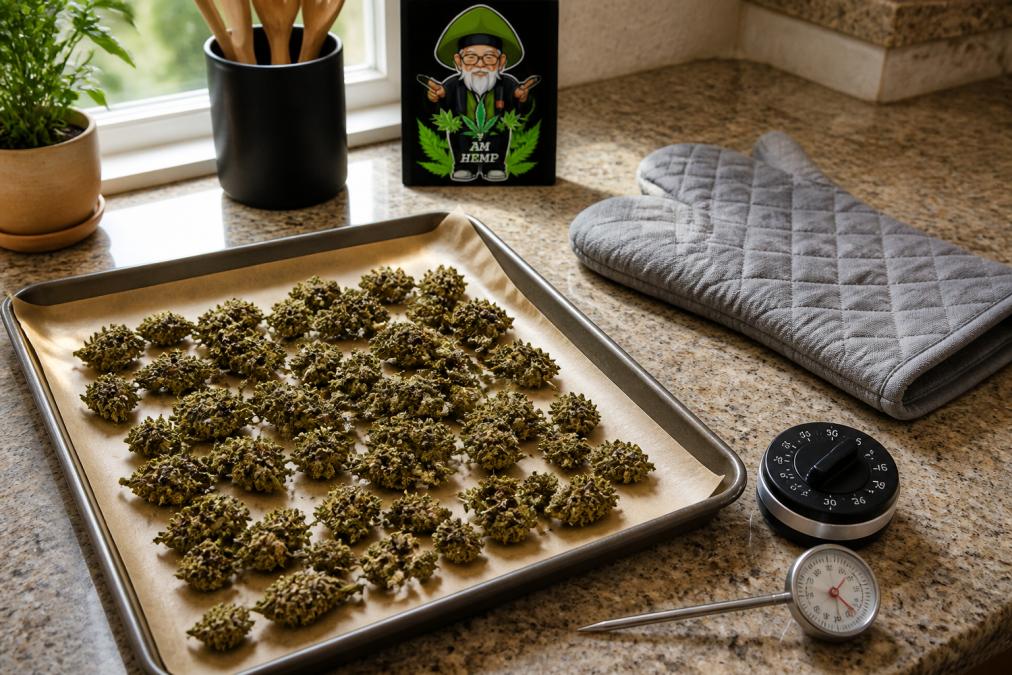
- Preheat your oven to 220-240°F
- Break flower into small, even pieces
- Spread it on parchment paper in a single layer
- Bake for 30-45 minutes, stirring once
- Let it cool before use
Vaporization method:
- Set your device between 315-350°F
- Load ground flower loosely
- Take slow, steady draws
- Expect effects within minutes
The chart below shows how temperature and time change your results.
| Temperature | Time | Result |
|---|---|---|
| Under 200°F | Any | Little to no conversion |
| 220-240°F | 30-45 min | Full conversion, best flavor |
| 250-300°F | 20-30 min | Fast conversion, harsher taste |
| Over 350°F | Any | THC degrades, weak effects |
Why You Still Feel Nothing After Decarbing
Here is the part most guides leave out: decarboxylation is rarely all-or-nothing. It is a curve. If you pull the flower early, sit at the low end of the temperature window, or use a device that never actually reaches its set temperature, you can convert only a fraction of the THCA. The result is a flower that smells and looks right but delivers a fraction of the THC you expected.
The three most common incomplete-conversion scenarios:
- Low-temp vaping. Many portable dry-herb vapes display a temperature that reflects the heater, not the herb. If the oven is packed too tight or you draw too fast, the flower never reaches the set point. You get flavor and terpenes, but the THCA stays mostly intact. This is the single most common "I vaped it and felt nothing" case.
- Poor combustion. A loosely rolled joint, a clogged bowl, or a quick puff that only cherries the edge of the flower leaves the center unburned. Combustion needs sustained heat across the material, not a flash at the tip.
- Short oven time. Pulling the tray at 15 minutes instead of 30-45 leaves a meaningful share of THCA unconverted. The flower is warm, not activated.
Bioavailability: Why the Same Flower Hits Differently by Method
Even fully decarbed flower does not deliver THC to your bloodstream the same way across methods. This is the second half of the "it didn't work" puzzle.
- Smoking and vaping send THC through the lungs into the bloodstream in seconds to minutes. Onset is fast, peak is quick, and the effect fades within a couple of hours. This is the most efficient route for most users.
- Edibles pass through the liver before reaching the bloodstream. The liver converts delta-9-THC into 11-hydroxy-THC, a metabolite that is often described as more potent and longer-lasting. Onset can take 30-90 minutes, and the peak is delayed. Users who expect an edible to hit like a vape often conclude the flower "didn't work" when they simply have not waited long enough.
- Tinctures and sublingual drops absorb through the tissue under the tongue and bypass much of the digestive route, giving a middle ground between smoking and edibles.
Best Indoor THCA Flower Strains 2026
Strain quality matters as much as your technique. Indoor-grown flower tends to carry higher potency and cleaner terpene profiles than outdoor or greenhouse options. Several indoor strains stand out for consistency and lab-verified numbers.
Top indoor picks this year include:
- Gumbo (AAA Indoor Smalls and Mediums) at 35.08%, an indica-dominant cultivar with sweet bubblegum and earthy notes
- Hood Candy at 27.04%, a hybrid with grape-and-berry candy terps and dense, frosted buds
- Donut Shop at 26.78%, a hybrid with bakery-style notes of bear claw, coffee, and raspberry
- Mixed Strain Exotic and Indoor Trim with Micros at 29.4%, a budget-friendly blend for rolling or infusing
Factors Affecting Cannabis Tolerance
Tolerance is the second most common reason THCA flower feels weak. Your body adapts to repeated cannabinoid exposure, so the same dose hits softer over time. But tolerance is only half the story. The other half is the flower itself, and most guides never mention it.

Key factors that change how you respond:
- Frequency of use: Daily users build tolerance faster than occasional users
- Body weight and metabolism: These affect how quickly compounds clear your system
- Baseline tolerance from other cannabinoids: Prior THC use raises your threshold
- Product potency variance: Two batches of the same strain can test differently
- Consumption method: Vaping delivers effects faster than edibles
The Quality Variable Most Guides Skip
Here is the angle you will not find on most competitor pages: sometimes the flower genuinely is the problem, and it has nothing to do with your tolerance.
Signs your flower may have degraded:
- Dull, muted smell. Fresh terpenes fade alongside THCA. If the jar smells flat, the chemistry has likely shifted.
- Brown or overly dry buds. Properly stored flower stays slightly sticky and green. Crumbly, brownish flower has been exposed.
- No harvest or test date on the COA. Without a date, you cannot tell how long the batch has been sitting.
- Bargain "shake" or trim. Small, low-grade material has more surface area exposed to air and degrades faster than intact buds.
How to Read a COA for Freshness and Potency
- Check the test date, not just the harvest date. A batch tested six months ago has had six months to degrade.
- Compare THCA to total THC. A high THCA number with a low total THC number can indicate the lab applied a conversion factor rather than measuring post-decarb THC directly. Both are valid, but they tell you different things.
- Look for CBN on the panel. Some labs report CBN separately. A measurable CBN value on a "THCA flower" is a signal that some degradation has already occurred.
- Match the batch number to the product you received. A COA for a different batch tells you nothing about your jar.
Quality variance between batches is real, even from the same grower. That is why I AM HEMP lab-tests each batch and ships in discreet packaging, so what you order matches what the COA says.
THCA vs. THC vs. Delta-9-THC: What the Test Results Show
THCA, THC, and delta-9-THC are related but not identical. THCA is the raw acid form. Delta-9-THC is the active, psychoactive compound. "THC" on a lab report usually refers to delta-9-THC after conversion.
Here is how they compare:
| Compound | Psychoactive | Found In | Activated By |
|---|---|---|---|
| THCA | No | Raw cannabis flower | Heat (decarboxylation) |
| Delta-9-THC | Yes | Heated cannabis | Already active |
| THC (total) | Yes | Lab reports | Combines both values |
American Chemical Society resources on cannabinoid chemistry
Common Mistakes That Keep THCA From Working
Most "THCA doesn't work for me" stories trace back to a handful of fixable errors. Here are the ones I see most often.
- Not applying enough heat. Raw flower stays inactive. You must decarb or vape it.
- Overheating the flower. Past 350°F, THC degrades and effects drop off.
- Using too little material. Under-dosing is common with homemade edibles.
- Ignoring tolerance. Daily use raises your threshold over time.
- Buying untested products. Without a COA, you cannot confirm potency.
- Expecting edibles to hit in minutes. They can take 30-90 minutes to peak.
Frequently Asked Questions
Why doesn't THCA get me high?
Raw THCA has a carboxyl group that blocks it from binding to CB1 receptors in your endocannabinoid system. Without heat, that carboxyl group stays attached, so THCA remains non-intoxicating. You need decarboxylation, which happens when you apply heat, to convert THCA into delta-9-THC, the psychoactive compound that produces euphoria. If you ate raw THCA flower or vaped it at too low a temperature, the conversion never happened.
How do I activate my THCA?
Apply heat. Smoking, vaping above 315°F, or baking at 240°F for 30-45 minutes converts THCA to THC through decarboxylation. The conversion rate depends on temperature and time. Too low and it won't fully convert. Too high and you degrade THC into CBN, which is sedating but not psychoactive in the same way. A kitchen thermometer helps you stay in the right range.
Will THCA flower get you high when smoked?
Yes, if the combustion or vaporization temperature is high enough. When you smoke THCA flower, the heat from the flame or coil converts THCA to THC instantly. That's why smoking raw flower produces psychoactive effects while eating it raw does not. Vaping works too, but only if your device reaches at least 315°F. Low-temp vape settings may leave a significant portion of THCA unconverted.
Can low-quality storage affect the potency of THCA flower?
Yes. Heat, light, and oxygen degrade cannabinoids over time. THCA stored in a hot car or a clear jar on a sunny windowsill will lose potency faster than flower kept in an airtight container in a cool, dark place. If your flower looks brown, smells like hay, or crumbles to dust, the cannabinoids have likely degraded. Proper storage preserves both THCA content and terpenes.
THCA flower rewards people who pay attention to heat, dose, and quality. Skip any one of those, and you will wonder why nothing happened. I AM HEMP makes that easier with handpicked indoor strains, verified COAs, and fast, discreet delivery to your door. Choose options from I AM HEMP and get flower you can actually trust.
