

Is High Potency Hemp Flower Worth It? A 2026 Guide
Table of Contents
- What Makes High Potency Hemp Flower Different
- How to Buy Lab Tested THCA Flower Online
- THCA Flower vs Regular Weed: Key Differences
- How to Read a COA for Hemp Flower
- Potency, Terpenes, and the Real Value Proposition
- Tolerance, Dosage, and Long-Term Cost Efficiency
- Storage, Degradation, and Product Longevity
- Conclusion: Is the Premium Price Justified?
- Frequently Asked Questions
Last Updated: September 20, 2026
What Makes High Potency Hemp Flower Different
High potency hemp flower stands apart from standard cannabis products because of its cannabinoid concentration and the deliberate cultivation methods that maximize potency. When we talk about high potency hemp flower, we're referring to products tested at 25% THCA content or higher, which represents a significant jump from standard flower that typically ranges between 15-20% THCA.
The difference isn't just a number on a lab report. Indoor cultivation techniques, controlled lighting, temperature, and nutrient management, allow growers to develop more strong cannabinoid profiles. The result is denser trichome coverage, more pronounced terpene expression, and a noticeably different experience compared to outdoor or greenhouse-grown alternatives.
At I AM HEMP, we focus exclusively on lab-tested indoor strains because the potency and consistency matter. A product like our Gumbo THCa Flower at 35.08% THCA represents what happens when cultivation excellence meets rigorous testing standards. That level of potency changes the entire value equation, you're getting more cannabinoids per gram, which directly impacts both effectiveness and cost efficiency over time.

The real question isn't whether high potency hemp flower is different. It is. The question is whether that difference justifies the premium price, and that depends entirely on your consumption habits, tolerance level, and what you're actually trying to achieve.
How to Buy Lab Tested THCA Flower Online
Buying THCA flower online requires one non-negotiable step: verify the Certificate of Analysis (COA) before purchase. This document proves that a third-party lab has tested the product and confirms its cannabinoid content, heavy metals screening, and pesticide residue levels.
Start by checking whether the retailer publishes COAs directly on their product pages. Reputable sellers make this easy, you should be able to download or view the COA without jumping through hoops or contacting customer service. If a seller won't provide a COA upfront, that's a red flag that should stop you from ordering.
Next, examine the source of the flower. Look for language about American farm sourcing and indoor cultivation. I AM HEMP sources exclusively from trusted American farms, which matters because it gives you traceability and ensures compliance with federal hemp regulations. Outdoor or imported flower introduces variables you can't control, and the price savings rarely offset the quality inconsistency.
Discreet packaging is a practical consideration. Your order should arrive in inconspicuous packaging that doesn't advertise its contents. Fast shipping also matters, THCA flower degrades over time, particularly when exposed to light and heat during transit. A retailer that prioritizes quick delivery is protecting product quality.
Finally, check the strain selection. Are they offering a curated selection of proven genetics, or just whatever's cheapest that week? I AM HEMP maintains a handpicked product rotation featuring strains like Hood Candy (27.04% THCA) and Donut Shop (26.78% THCA), genetics selected for both potency and flavor profile consistency. That curation takes work, and it shows in the final product.

THCA Flower vs Regular Weed: Key Differences
The core distinction between THCA flower and traditional cannabis comes down to legality and potency potential. THCA flower is hemp-derived and complies with the 2018 Farm Bill, which legalized hemp products containing less than 0.3% delta-9 THC by dry weight. Regular weed exists in a different legal framework entirely, varying by state and local jurisdiction.
From a chemistry standpoint, THCA (tetrahydrocannabinolic acid) is the raw, non-psychoactive precursor to delta-9 THC. When you heat THCA, through smoking, vaporization, or cooking, decarboxylation converts it into psychoactive THC. This conversion is what creates the effects most people associate with cannabis. Raw THCA flower contains virtually no delta-9 THC unless it's been heated or aged extensively.
The potency difference is significant. High potency hemp flower regularly tests above 30% THCA, while traditional cannabis flower typically ranges from 15-25% THC. That gap matters for experienced users seeking intensity, but it can be overwhelming for newcomers. Someone accustomed to standard flower might find 35% THCA significantly stronger than expected.
Terpene profiles differ too. Hemp flower cultivars are bred specifically for THCA production, which sometimes comes with different terpene expressions than traditional cannabis strains. A strain like Gumbo, with its signature candy and earthy notes, represents the flavor and aroma potential of premium hemp genetics. You're not getting "less" flavor; you're getting a different flavor signature optimized for the hemp market.
The practical advantage is accessibility and discretion. THCA flower ships legally across state lines, arrives discreetly, and doesn't require a medical card or state licensing. That convenience factor alone explains why many users prefer it, regardless of potency comparisons.
How to Read a COA for Hemp Flower
A Certificate of Analysis is your proof that the product matches what the seller claims. Understanding how to read one separates informed buyers from those trusting marketing language.
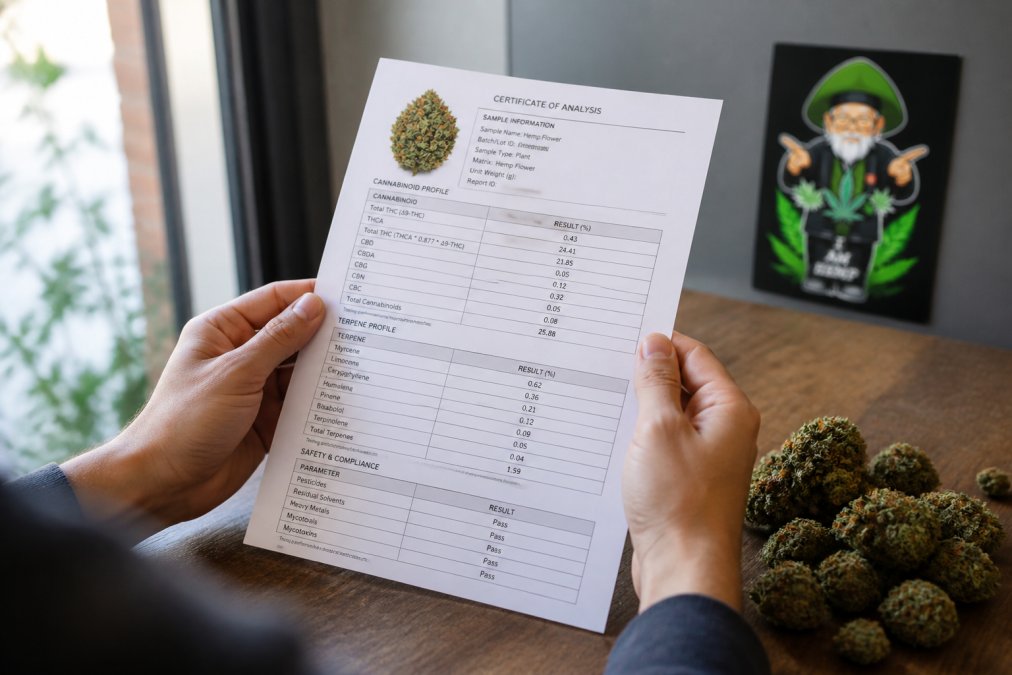
Start at the top: verify the lab name and accreditation. Legitimate labs are ISO/IEC 17025 accredited, which means they meet rigorous standards for testing accuracy. The lab's name should be a real facility, not a generic "certified lab" claim. Check the sample ID and test date, you want results from recent testing, ideally within the last three months.
Look for the cannabinoid profile section. This lists THCA, delta-9 THC, CBD, and other cannabinoids as percentages by weight. For high potency hemp flower, THCA should be prominently displayed. If a product claims 30% THCA but the COA shows 22%, that's a mismatch that warrants investigation. The delta-9 THC percentage must be below 0.3% on a dry weight basis to comply with federal hemp regulations.
THCa Flower|Gumbo|AAA Indoor Smalls and →
Examine the contaminant testing section. This covers heavy metals (lead, cadmium, arsenic), pesticide residues, and microbial contaminants. The COA should show "pass" or "non-detect" for all contaminants. If results show detectable levels, the lab should specify whether they fall within acceptable thresholds. Reputable sellers use labs that test comprehensively, not just the bare minimum.
Terpene profiles appear on premium COAs. These list specific terpenes like myrcene, limonene, and pinene as percentages. Terpenes drive flavor and aroma, so this section helps you understand what to expect when you open the package.
Finally, check the lab's signature and accreditation number. This confirms the results are legitimate and traceable. If you can't verify the lab exists or find their accreditation, the COA itself is suspect.
Potency, Terpenes, and the Real Value Proposition
The value of high potency hemp flower hinges on understanding what potency actually delivers and where terpenes fit into the equation.
Potency, measured in THCA percentage, determines how much cannabinoid content you're consuming per gram. A 35% THCA flower delivers roughly double the cannabinoids of a 17% THCA product. For users with established tolerance or specific therapeutic goals, that concentration matters. You need less flower to achieve the same effect, which reduces consumption volume and stretches your supply further.
But potency alone doesn't determine quality or value. A 30% THCA flower with a flat, one-dimensional terpene profile will feel less engaging than a 28% THCA flower with a complex, multi-layered terpene expression. Terpenes aren't just flavor, they influence the overall experience through the entourage effect, where cannabinoids and terpenes work synergistically.
Consider the difference between our Gumbo (35.08% THCA) and Hood Candy (27.04% THCA). Hood Candy brings exotic genetics and grape-candy terpenes that appeal to users seeking flavor complexity alongside potency. Neither is objectively "better", the value depends on what you prioritize.
The real value proposition emerges when you combine moderate-to-high potency (25-30% THCA) with a well-developed terpene profile. That sweet spot delivers both effectiveness and enjoyment without the premium price tag of the highest-potency outliers.
Tolerance, Dosage, and Long-Term Cost Efficiency
Tolerance builds faster than most users expect, particularly with daily consumption of high potency products. Your body adapts to cannabinoid exposure, requiring progressively higher doses to achieve the same effect.
If you're new to THCA flower, start with products in the 25-28% THCA range. I AM HEMP's mixed strain trim at 29.4% THCA offers a budget-friendly entry point, while our Donut Shop at 26.78% THCA provides proven genetics. Both allow you to establish tolerance baseline before committing to the highest-potency products.

Storage, Degradation, and Product Longevity
THCA flower degrades over time, and understanding the degradation process directly impacts whether high potency products retain their value.
Conclusion: Is the Premium Price Justified?
High potency hemp flower is worth the premium price if three conditions align: you have established tolerance, you consume within weeks of purchase, and you prioritize potency over other factors like flavor complexity or cost-per-use.
Frequently Asked Questions
Does high potency hemp flower actually get you high?
Yes. High potency THCA flower converts to delta-9 THC when heated through smoking, vaping, or cooking. The psychoactive effect depends on the cannabinoid concentration and your tolerance. Lab-tested flower with 25%+ THCA will produce noticeable intoxication for most users. Beginners should start with lower doses, while experienced users may seek strains above 30% for stronger effects.
What should I look for in a lab report when buying lab tested THCA flower online?
Check the Certificate of Analysis for total THCA percentage (higher = more potent), delta-9 THC content (should be below 0.3% for legal compliance under the 2018 Farm Bill), cannabinoid profile, terpene breakdown, and pesticide/heavy metals testing results. Verify the lab's credentials and that testing was performed on the exact batch you're purchasing. A complete COA shows consumer safety and product transparency.
How does THCA flower vs regular weed differ in effects and legality?
THCA flower is raw hemp-derived cannabis with minimal delta-9 THC (under 0.3% by dry weight basis), making it legal under the 2018 Farm Bill. Regular weed contains higher delta-9 THC levels and is federally illegal. Both produce similar psychoactive effects when heated due to decarboxylation, but THCA flower offers legal access without state licensing. The experience depends on cannabinoid concentration and terpene profile rather than the source.
Is high potency hemp flower worth the extra cost compared to lower potency options?
It depends on your tolerance and consumption habits. High potency strains (28%+ THCA) require smaller doses, potentially reducing overall spending over time. Premium indoor genetics and lab-tested batches justify higher per-ounce prices through superior flavor, consistency, and potency. Budget options like trim and micros ($35) work for casual users, while experienced consumers often find premium indoor strains ($40-50) deliver better value through efficiency.
